Harvesting Value – How a $7.5B Global Fruit Leader Engineered a Circular Economy Success Story
In the modern agricultural landscape, "waste" is increasingly being redefined as an untapped resource. For a global titan in the packaged fruit industry, the transition from a traditional linear production model to a circular, zero-waste operation wasn't just an environmental goal, it was a complex engineering and procurement challenge that required a complete reimagining of industrial byproducts.
Founded in 1851 and headquartered in Singapore, our client is a household name in fruit production and distribution. With a staggering $7.5 billion in revenue, their footprint is truly gargantuan: 109,000 acres of farmland across five continents, a private fleet of 13 cargo vessels, 5 manufacturing plants and a massive network of 160 distribution centers. Despite their scale, their mission remained focused on the "Triple P": People, Product and Planet. To honor this commitment, they set out on a pioneering journey to transform fruit waste into high-value products, turning environmental liability into a new revenue stream.
The Challenge: Navigating the "Unexplored Process"
While the concept of upcycling fruit waste sounds simple in theory, industrial execution is fraught with technical and market barriers. Our client faced a "Perfect Storm" of three primary challenges that threatened the viability of the project:
1. The Scarcity of Expertise and Partners
The specific chemical and mechanical processes required to convert organic fruit waste into high-value derivatives (such as bio-actives or specialized fibers) are often guarded by proprietary technology. Because the global market for this specific domain is still emerging, there was a severe lack of established suppliers. Identifying partners who possessed the technical "know-how" without hitting a wall of intellectual property restrictions was a monumental task.
2. Design Fluidity and Scope Creep
In traditional manufacturing, you have a blueprint. In an "unexplored process," the blueprint is a moving target. The client struggled with Front-End Engineering Design (FEED). Frequent shifts in technology requirements led to constant changes in the plant layout, utility needs and equipment specifications. This volatility made it nearly impossible to finalize the Bill of Quantities (BOQ), leading to a high risk of project paralysis.
3. The Budgetary Tightrope
Uncertainty is the enemy of the balance sheet. With the process and layout in a state of flux, keeping the project within its $6.5 million budget was a massive concern. Every trial and every new supplier discussion threatened to push the timeline further out, potentially inflating costs and delaying the return on investment.
Our Process: A Structured Blueprint for Innovation
YCP Supply Chain stepped in to provide the structured procurement and project management framework needed to bring this visionary plant to life. We divided the intervention into three high-impact stages:
Phase 1: Aggressive Market Intelligence & Outreach
We began by casting a wide net to bridge the information gap. Our team conducted a massive outreach program, sending Requests for Information (RFI) to 85 global equipment suppliers. We didn't stop at the machinery; we also engaged 40 local suppliers in the Philippines to handle plant construction, utilities and site-specific infrastructure.
By facilitating continuous technical workshops, we translated the client's vague "process requirements" into concrete engineering terms. We worked side-by-side with stakeholders to draft Term Sheets that defined expectations, evaluation criteria and performance KPIs from day one.
Phase 2: The Triple-Round Evaluation
To filter the "best-fit" partners from the crowd, we implemented a rigorous, three-round selection process:
Round 1 (RFP): Analysis of detailed proposals and technical questionnaires.
Round 2 (Presentation): Shortlisted vendors (5 for equipment, 20 for construction) presented their capabilities to solve specific layout and utility challenges.
Round 3 (Site Visits & Q&A): We conducted site visits to verify the vendors' manufacturing capabilities and held deep-dive Q&A sessions to ensure total alignment with the Statement of Work (SOW).
This structured transparency removed the "guesswork" from the proprietary technology, allowing us to finalize the plant layout and Bill of Quantities with surgical precision.
Phase 3: Strategic Cost Optimization
With 17 offers for construction and 3 for specialized process equipment on the table, we moved into the negotiation phase. Our team utilized Pricing Model Analysis to strip back "buffer costs" often added by vendors in unexplored projects. Through multiple rounds of offline negotiations and a final high-stakes online negotiation, we pushed for commercial terms that protected the client's budget while ensuring high-quality delivery.
Business Impact: Delivering the Future of Fruit
The results of this transformation went beyond mere cost savings; they established a new benchmark for sustainable manufacturing in the region.
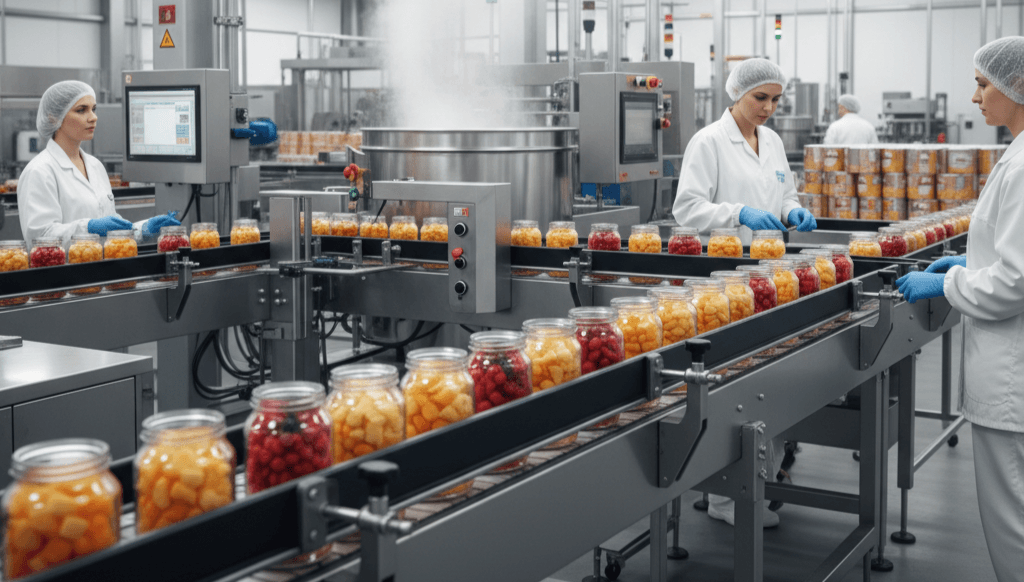
[Image: A high-tech sustainable manufacturing plant interior processing fruit derivative]
Strategic Value Added
By completing this project on time and under budget, the client achieved several non-financial wins:
Zero-Waste Proof of Concept: The client now has a replicable model for their other 4 manufacturing plants globally.
Resource Efficiency: The 17% savings was immediately redirected toward further R&D in environmental programs.
Supply Chain Resilience: By developing a network of 40 local Philippines-based suppliers, the client strengthened their regional footprint and reduced logistics-related carbon emissions.
Conclusion: Sustainability as a Competitive Advantage
The success of this project proves that even the most "unexplored" and "challenging" environmental initiatives can be profitable when backed by a structured procurement and engineering strategy. This $7.5 billion leader didn't just reduce their carbon footprint; they turned a waste-management problem into a $1.1 million savings opportunity and a brand-new product line.
At YCP Supply Chain, we specialize in making the "unexplored" predictable. We turn complex, high-stakes sustainability goals into operational realities.
Impact Category | Key Result |
Direct Cost Savings | $1.1 Million savings identified on a $6.5 Million budget. |
Savings Percentage | 17% reduction in total project expenditure. |
Operational Success | 100% Timely delivery of all equipment and construction milestones. |
Market Positioning | Successful conversion of waste into High-Value Products, enhancing brand equity. |